

A male house helper can support cleaning, laundry, serving, household organisation and agreed errands. The exact role should be written around your home’s needs and working hours. Specialist cooking, driving, security and medical care should not be assumed to be included simply because someone is called a helper.
Give the role a workable shape
The most useful duties list describes the work that actually happens in your house. Start by walking through a normal day and noting the tasks that need consistent attention. Separate cleaning and laundry from cooking, driving or specialist care. Then identify who already handles each task so responsibilities do not overlap or disappear between people.
A helper’s workload depends on the size and use of the home, not only the number of rooms. Guest visits, a large laundry volume and frequent meal service can change the day considerably. Discuss these patterns in the initial brief. A clear role protects the household from missed tasks and the worker from an expanding list of duties that was never part of the agreement.
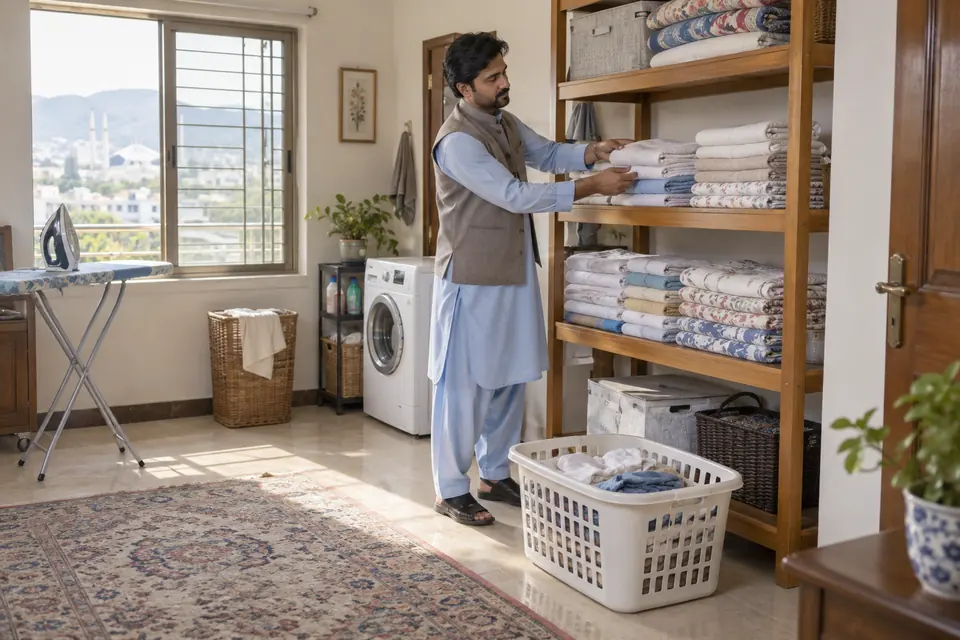
An illustrative weekly duties plan
| Work area | Regular duties to discuss | Planning note |
|---|---|---|
| Shared rooms | Tidying, dusting and floor cleaning | Agree which rooms and the normal frequency |
| Laundry | Washing, drying, folding or ironing | State which steps are included and special-care limits |
| Dining | Setting the table, serving and clearing | Coordinate around meal times and other staff |
| Kitchen support | Dishes and agreed surface cleaning | Do not assume full cooking is included |
| Supplies | Checking household consumables | Set an approval process for purchases |
| Periodic tasks | Selected deeper cleaning or storage organisation | Fit these into a realistic weekly timetable |
Turn “keep the house clean” into specific expectations
Explain what should be completed daily and what can be scheduled weekly. A brief description is often enough: clear shared surfaces, sweep or clean the agreed floors, complete the planned laundry and prepare the dining area for the evening meal. Discuss which materials and equipment the helper knows how to use and introduce anything unfamiliar.
Avoid assuming knowledge of every appliance, delicate surface or laundry label. Show your preferred method for items that need particular care, or keep those tasks with a suitable specialist. If a task requires working at height, electrical work or hazardous materials, do not casually add it to a general household role. The aim is a predictable routine, not an unlimited instruction to handle any problem that appears.
Set a sensible laundry routine
Laundry can consume more time than expected. Tell the candidate the usual volume, whether ironing is included and how the family sorts everyday items from delicate clothing. Explain where clean items belong and whether wardrobe organisation is part of the job. Clothing care for one person may also overlap with a personal attendant’s role.
Schedule laundry around other fixed duties. If the helper is serving lunch at the same time that a large ironing task is expected, decide which takes priority. Do not judge the placement on an impossible timetable. A brief review after the first week can help adjust task order once both sides understand the actual volume of work.
Handle errands and money clearly
If the helper will buy groceries or household supplies, define a simple process. Agree who approves purchases, the budget, whether substitutions are allowed and how receipts and change are returned. Start with straightforward tasks and increase independence only after expectations are understood.
Give enough information for an errand without sharing unnecessary private details. Avoid mixing cash, personal documents and unrelated instructions in a rushed message. If your home already has a cook, decide who writes the grocery list and who makes purchases. One clear handover is easier than two people being held responsible for the same missing item.
A sample brief for a male helper
An illustrative brief might say: “We need a male house helper for a monthly live-out arrangement in Chaklala, Rawalpindi. The role covers agreed shared rooms, laundry and evening serving. Cooking and driving are excluded. We will discuss working hours, weekly rest and the normal laundry volume before hiring.” This is more useful than asking for an all-rounder without explaining the work.
For Islamabad, use the same structure and include your sector. A candidate needs enough location detail to assess the commute. If you are considering live-in help, describe accommodation and agree personal space, rest and time off. Neither arrangement should depend on responsibilities being kept vague until after joining.
Review the role with practical feedback
Use concrete observations: a particular room was missed, laundry needs a different sorting method, or meal clearing takes place later than expected. Explain what should happen next time and ask what prevented it. General criticism such as “you should know everything” gives no useful direction.
If the household’s requirements have grown, revisit the hours and duties instead of silently expanding the job. To discuss an appropriate male helper, contact Domestic Staff Provider on 0334 1041114. The placement fee is equal to one month’s agreed salary, with no recurring commission and six-month replacement support under the written terms.
Questions about this guide
Can a male helper also cook?
Only if the candidate has the relevant skill and the cooking duties are explicitly included in a realistic workload. A combined title does not establish competence or available time.
Should every cleaning task be done daily?
Set frequency around how the household uses each area. Agree daily priorities and schedule periodic work so the role remains achievable.